Plastering: a complete guide for Brackley homeowners
By Project X Constructions
Plastering in Brackley: what every homeowner should know
If your walls or ceilings need attention, knowing the basics of plastering helps you make the right decision — whether it’s a simple skim, a full re-skim, or remedial work after damp or structural repairs. This guide explains the practical steps, common problems and what to expect from a tradesperson working in Brackley and the surrounding villages.
Common plastering jobs for Brackley homes
- Re-skim ceilings and walls after removal of old dot-and-dab or damaged plaster
- Repair hairline and structural cracks, including movement cracks around doors and windows
- Replace sections of lath-and-plaster ceilings or fit plasterboard where joists are damaged
- Plaster on to brickwork after cavity repairs, extensions or oak-frame work
- Finish interior renovations — plastering ready for paint or tile fixing
Choosing the right type of plaster
Plastering language can be confusing. Here are the main choices you’ll meet on site:
- Bonding coat (scratch coat): used where new plaster must key to dense backgrounds such as brick or concrete. It’s often followed by a finishing coat.
- Finish plaster / skim: thin, smooth layer (commonly 2–3mm) applied over a prepared base or plasterboard to create a paint-ready surface.
- Setting vs drying plasters: setting plasters chemically set and are useful for rapid repairs or thicker coats; drying (gypsum) plasters are used for fine skimming.
- Plasterboard (dot-and-dab or mechanical fixings): used for large areas or where minimal disruption is needed; joints are taped and skimmed.
A local builder with bricklaying and liquid screed certification — like the team working across Brackley — will advise which system suits your property, whether an older terraced house in town centre or a newer suburban build.
Preparing a room: practical checklist
- Remove loose wallpaper, loose plaster and any debris. Small amounts of old wallpaper can be left if the plasterer is treating it as an adhesion problem, but full removal is safer.
- Check for damp. Plaster should not be applied over rising or penetrating damp until repairs are complete.
- Protect floors and fixtures with dust sheets and floorboards. Expect dust — professional tradespeople use sheeting, boot protection and extractors where possible.
- Clear furniture from the room or group and cover. A clear room speeds up the job and reduces damage risk.
Typical sequence for a re-skim or new plaster
- Survey and prep: identify substrate, treat defects and check moisture.
- Keying or bonding coat: provide a suitable base where needed.
- Skim coat(s): apply finish plaster to achieve a smooth surface.
- Drying and light sanding: remove trowel marks and prepare for decoration.
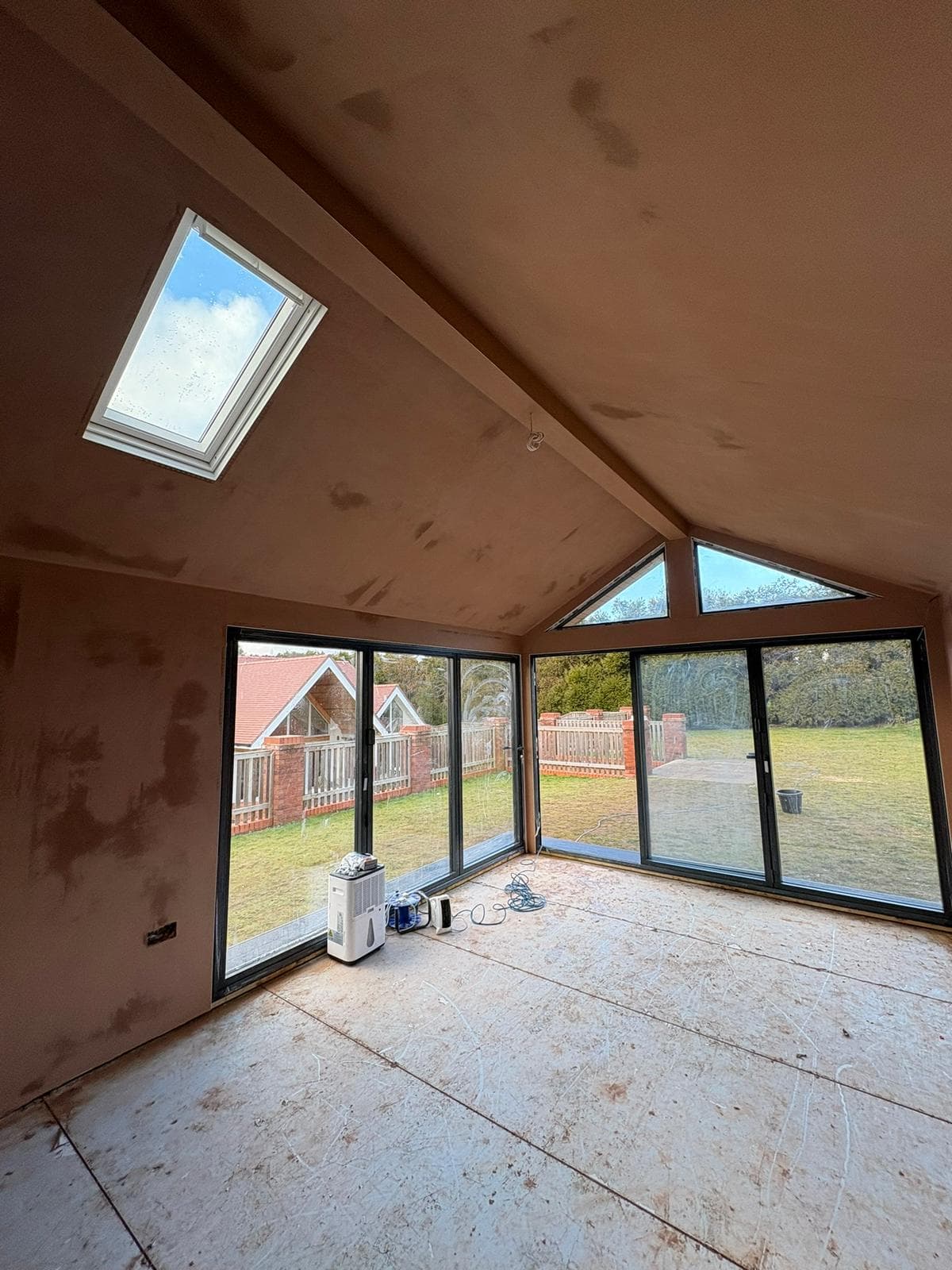
A well-executed skim depends on correct substrate prep and ambient conditions — ventilation, temperature and plaster thickness all influence drying.
Fixing common problems
- Hairline cracks: often bridged with fibre mesh tape and skimmed with finish plaster.
- Movement cracks: may need inspection and, where movement persists, mechanical restraint or rebuild of the defective section.
- Sagging ceilings: if joists or laths are compromised, a professional will recommend either reinstating lath-and-plaster, fitting battens and reboarding, or replacing with new plasterboard.
- Plaster blown or detached: sections must be cut out back to a solid edge and relaid — patching over poor plaster only delays failure.
How long does plaster take to dry? (realistic expectations)
Drying depends on plaster type, thickness and room conditions. A thin skim will usually be touch-dry in 24–48 hours in warm, ventilated conditions; thicker, setting plaster or damp repairs can take longer. Good ventilation and avoiding rapid heating helps prevent shrinkage cracks.
When to call a professional in Brackley
Call a builder when the job involves structural repairs, damp investigation, large areas or ceilings, or when you want a guaranteed finish. A tradesperson offering end-to-end renovations — with 17 years’ hands-on experience, bricklaying and liquid screed certification, a 10-year installation guarantee and £1M public liability insurance — will manage surveys, repairs and the final skim so you don’t need to coordinate multiple contractors.
What a reliable plasterer should provide
- A clear written proposal detailing scope, materials and schedule
- Site protection and dust control measures
- Regular updates during the job and a final snag list
- A workmanship guarantee and appropriate insurance
Factors that affect cost (so you can compare quotes)
- Size and condition of the area (number of patches vs full re-skim)
- Underlying issues: damp, structural repair, or rotten joists
- Access and whether scaffolding or temporary floor protection is needed
- Finishes required: ultra-smooth skim, artex removal and re-skim, or decorative textures
Avoid choosing purely on price. A low initial quote can mask poor prep, which leads to repeat works later.
Ready to get your plastering sorted in Brackley?
If you want a reliable, straightforward plastering job — from a single room re-skim to full renovation plasterworks — the local team with 17 years’ experience will survey your property, recommend the right system and provide a written quote and programme. Contact us to arrange a site visit and find out how we’ll protect your home and deliver a finish ready for decoration.