How Long Does Plaster Take to Dry Before Decorating?
By Projex Constructions Ltd
What determines plaster drying time?
The short answer is that plaster needs to lose its moisture gradually before paint or wallpaper is applied. The exact drying period depends on what has been plastered, how much material has been applied and the conditions within the room.
That is why a realistic decorating date cannot be based on the size of the room alone. A thin skim over sound plasterboard may behave very differently from several coats applied to a solid wall. When we assess a plastering job in Brackley, we look at all the layers rather than treating every wall as the same.
The property factors that make the biggest difference
The surface beneath the plaster
Plasterboard and solid brick or block walls absorb and release moisture differently. Plasterboard can provide a relatively consistent background, but the joints, fixings and board condition still affect how the finish dries. A skim coat may dry at different rates across the surface if the background has been prepared unevenly.
Solid walls are more variable. Brick, blockwork and older masonry can draw moisture from the plaster at different rates. If the wall has previously been painted, repaired or coated with a material that restricts movement, the plaster may take longer to dry evenly. This is one reason preparation matters before the first coat is applied.
The thickness and number of coats
A final skim is a thin finishing layer, while work over an uneven brick or block wall may involve thicker underlying coats beneath it. Moisture has further to travel through a thicker application, so the surface can look dry before the material below has fully settled.
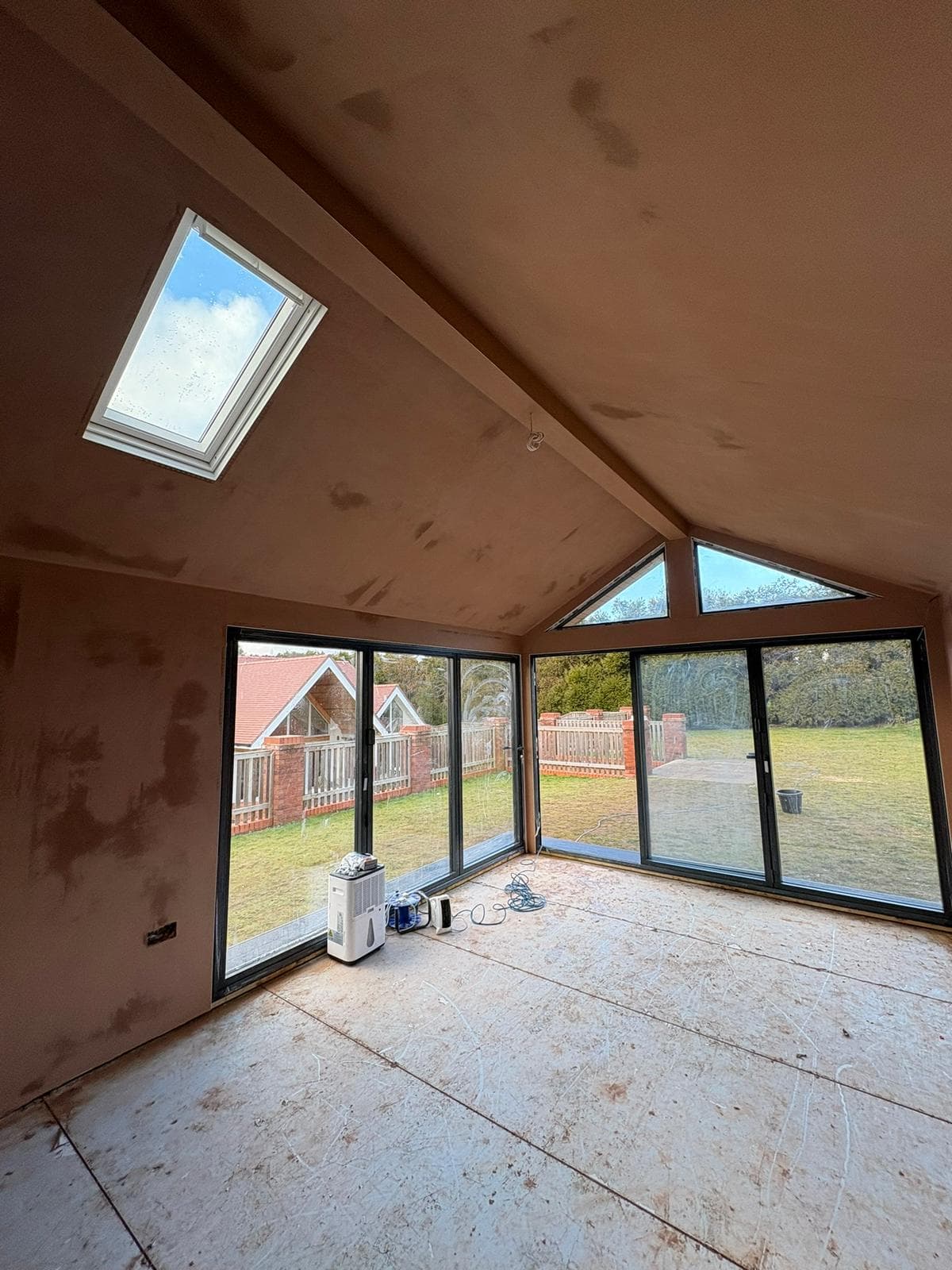
The colour of the plaster is a useful visual guide, but it is not the only consideration. Areas around corners, window and door openings, joints and repairs often dry at a different pace from the broad centre of a wall. Decorating too soon can trap moisture in these slower sections.
The room itself
A small, enclosed room with limited air movement will usually dry differently from a large room with good ventilation. Kitchens, bathrooms and utility areas also introduce more moisture through their normal use, which can affect the balance of the room while plaster is drying.
Ventilation should be controlled rather than extreme. Allowing air to move through the room helps moisture escape, but forcing the process with intense heat or a strong draught can dry the surface too quickly. That may contribute to uneven drying, shrinkage or fine cracking, particularly where thickness varies.
The construction of the property also matters. Rooms with solid external walls, restricted ventilation or a history of damp need closer assessment than a straightforward internal partition. The plaster itself cannot solve an ongoing moisture problem, so the condition of the wall beneath it has to be understood first.
Why decorating too early causes problems
Paint does more than change the colour of a wall. Once applied, it can form a film over the plaster and restrict the remaining moisture from escaping. This can lead to patchy colour, paint not sticking properly, bubbling or areas that remain visibly darker beneath the paint.
Wallpaper creates a similar risk. If moisture is held behind the paper, the adhesive may not perform as intended and the finish can loosen or show marks. Even when the wall appears acceptable at first, defects may become obvious as the surface continues to dry.
The same principle applies to first coats of watered-down paint, often called mist coats, and to primers. They are important on absorbent new plaster, but they should not be treated as a way to bypass proper drying. The correct paint or primer still depends on the condition and dryness of the surface.
What you can check before decorating
Look across the wall in good, even light and compare areas rather than checking only one convenient patch. Uneven darker sections, especially around repairs, corners and joints, suggest that moisture is still present. The surface should also feel consistently dry, with no soft, cool or powdery areas.
Pay attention to the room as well. If condensation is building on windows or the space feels persistently humid, decorating is likely to introduce problems rather than finish the job. Keep air circulating without creating harsh, direct heat against the plaster.
Do not rely on a home moisture meter alone. Its readings can be affected by the material beneath the plaster, salts in brick or block walls and changes in the wall itself. A visual inspection, knowledge of the materials used and an understanding of the wall construction provide a more reliable basis for deciding what happens next.
How we advise on plaster drying in renovations
For homes and renovation projects across Brackley, Banbury, Bicester, Buckingham and surrounding villages, we consider the substrate, coat thickness, room use and ventilation before discussing decorating. We can then explain which areas are likely to dry together and which may need longer before painting.
If your project involves new partitions, repaired brick or block walls or several rooms being plastered in stages, the order and timing of the work matter too. Decorators, flooring installers and fitted furniture should not be brought into a room simply because the final skim looks clean. The surface needs to be ready for the next trade, not just visually complete.
You can read more about our Plastering service, including repairs, re-skimming and plastering connected with renovations and extensions.
Get the timing right for your project
There is no dependable decorating date that applies to every plastered room. The right decision comes from the property, the background and the way the room is being used. At Projex Constructions Ltd, we assess those details as part of the work and give you practical guidance for the next stage. Contact us in Brackley to discuss your plastering requirements and request a project-specific quote.